
Cupboard & Drawer Installation and Repair in London, Ontario
- Free consultation
- Written estimates
- London, Ontario
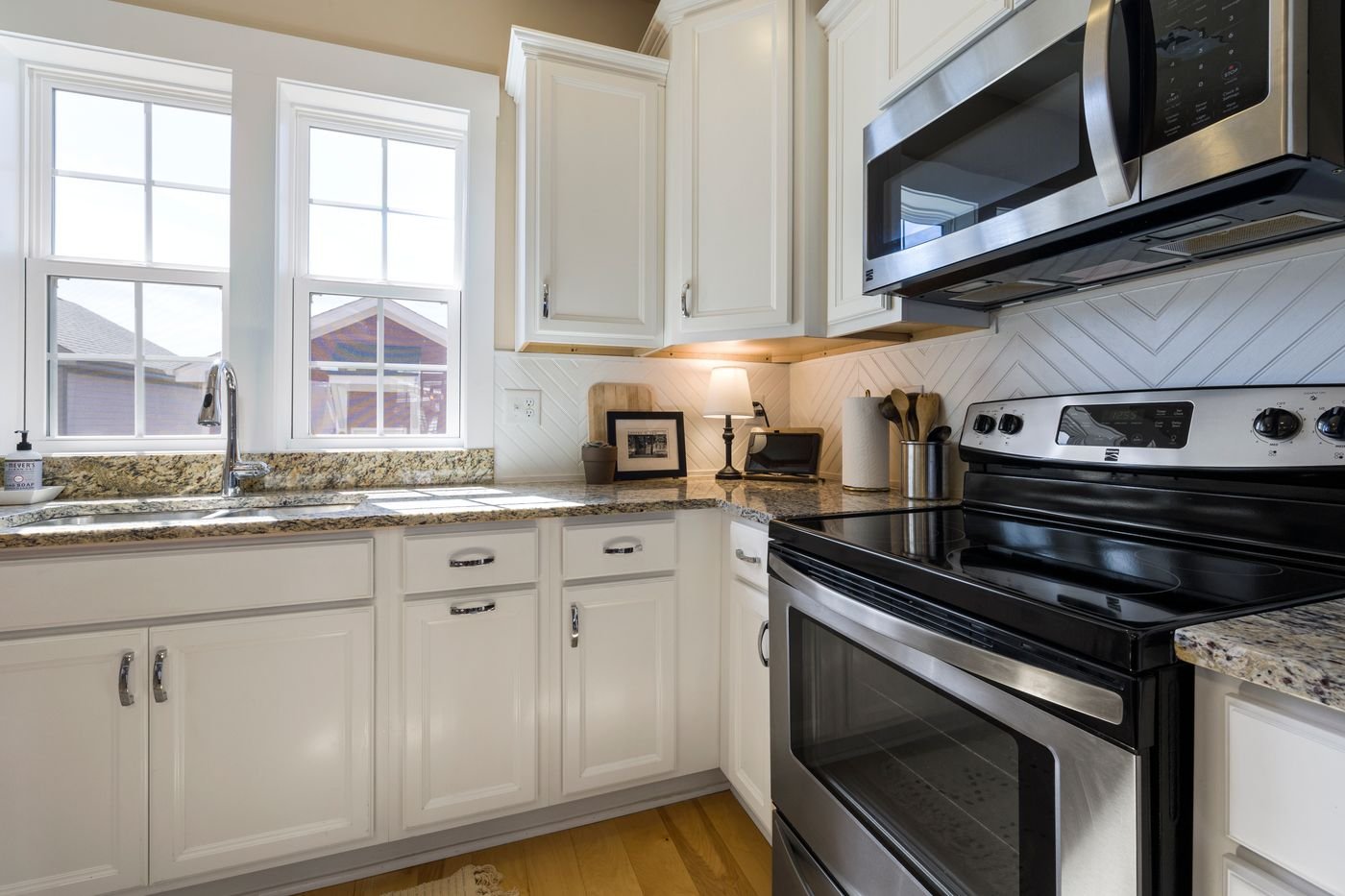
Sagging doors, jammed drawers and broken hinges make kitchens and bathrooms frustrating. We adjust, repair and replace cupboard and drawer hardware.
What Cupboard & Drawer Installation and Repair includes
- Hinge and slide replacement or adjustment
- Door re-hanging and alignment
- New handles, pulls and soft-close hardware
- Drawer box repair
How we work
- Preparation. Tell us about the job. We review photos and details, ask the right questions and give you a clear estimate.
- Communication. We agree scope, materials and timing with you and keep you updated as work progresses.
- Execution. We do the work carefully, protect your space, clean up and walk you through the result.
Good to know: Many sticking drawers only need adjustment rather than replacement; we will check before recommending parts.
Kitchens and bathrooms run on doors and drawers
You open them dozens of times a day, so when they go wrong, you notice. A door that hangs crooked, a drawer that sticks, a hinge that has pulled out of the frame, a handle that spins: these are small faults with a big effect on how a kitchen or bathroom feels. The good news is that most are easy to fix, and many cabinets look and work like new with a few adjustments and the right hardware.
This guide explains how cupboard and drawer repair and installation work in London, Ontario homes, what usually goes wrong and what can be improved. For new cabinets, see cabinetry and shelf and cabinet installation.
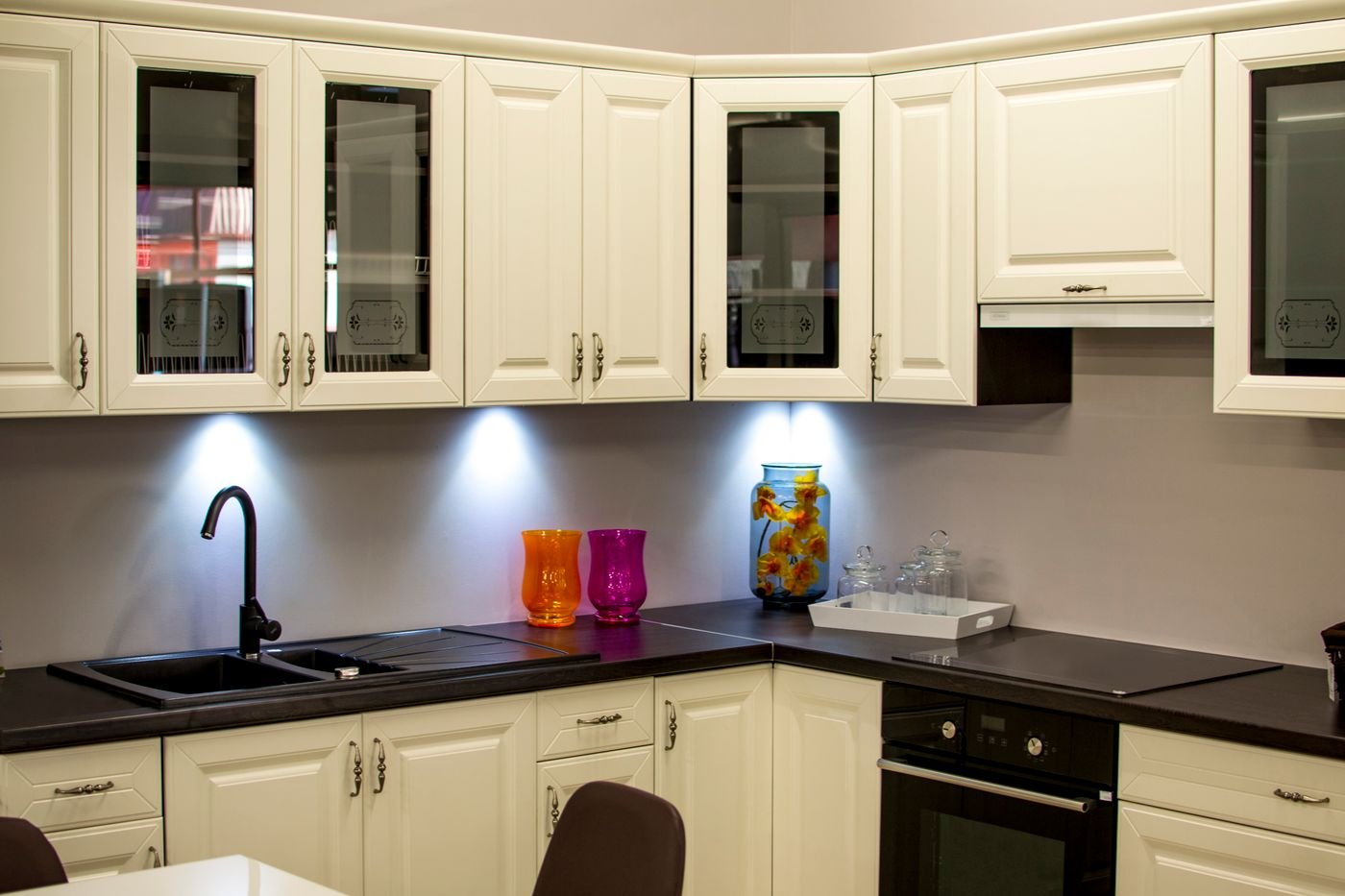
What we do
- Hinge adjustment, repair and replacement.
- Door re-hanging and alignment.
- Drawer slide repair, adjustment and replacement.
- Soft-close upgrades for doors and drawers.
- New handles, pulls and knobs.
- Drawer box repair: loose joints, broken bottoms and damaged fronts.
- Stripped screw holes repaired and re-fastened.
- Door replacement to refresh a kitchen without replacing the boxes.
Doors that hang badly
When a door sits crooked, rubs its neighbour or will not stay shut, the cause is usually one of these.
- Loose hinge screws. The simplest fix is tightening, but when the holes are stripped the screws need a better grip.
- Hinges out of adjustment. Most modern concealed hinges have screws that move the door in three directions.
- Frame or door damage. A cracked frame or split door needs repair before the hinge can hold.
- Swollen or warped doors. Moisture near sinks and dishwashers can distort doors, and the cause should be addressed.
- Worn hinges. Old hinges can lose their grip or spring tension, and replacement is the solution.
How stripped screw holes are repaired
When a screw spins and will not hold, the wood or particle board around it has been damaged. We repair it by filling the hole with glued dowels or a suitable filler, letting it set and re-drilling a fresh pilot hole. For particle board, specialised repair products or a different fastener can help. Using the same hole with a longer or thicker screw is not always possible, because it can split the material.
Drawers that stick or fall apart
Drawers fail in a few typical ways:
- Dirty or damaged slides. Debris and bent runners cause sticking. Cleaning and adjustment may be enough.
- Loose slides. Screws pull out of the cabinet side or drawer box, and the drawer sags.
- Out-of-square boxes. A drawer that has racked will bind, and the joints need repair.
- Broken bottoms. Thin drawer bottoms crack under heavy loads and can be replaced.
- Worn-out slides. Old slides can be replaced with modern, full-extension or soft-close ones, if the box suits them.
Soft-close upgrades
Soft-close hinges and slides stop doors and drawers from slamming, and they feel better in daily use. Many cabinets can be upgraded, though it depends on the cabinet style and the space around the door or drawer. We check the construction, the hinge type and the clearances, and choose hardware that fits. Add-on dampers are an option for some doors.
Handles, pulls and knobs
New hardware is one of the easiest ways to refresh a kitchen or bathroom. A few points help:
- Hole spacing. Measure the centre-to-centre distance of the existing holes, and choose pulls that match to avoid drilling new ones.
- Size and proportion. Large drawers look better with longer pulls. Small doors suit knobs.
- Consistent placement. We use a template so every handle sits in the same position.
- Finish. Match or contrast with taps, lights and appliances.
Refreshing a kitchen without a full remodel
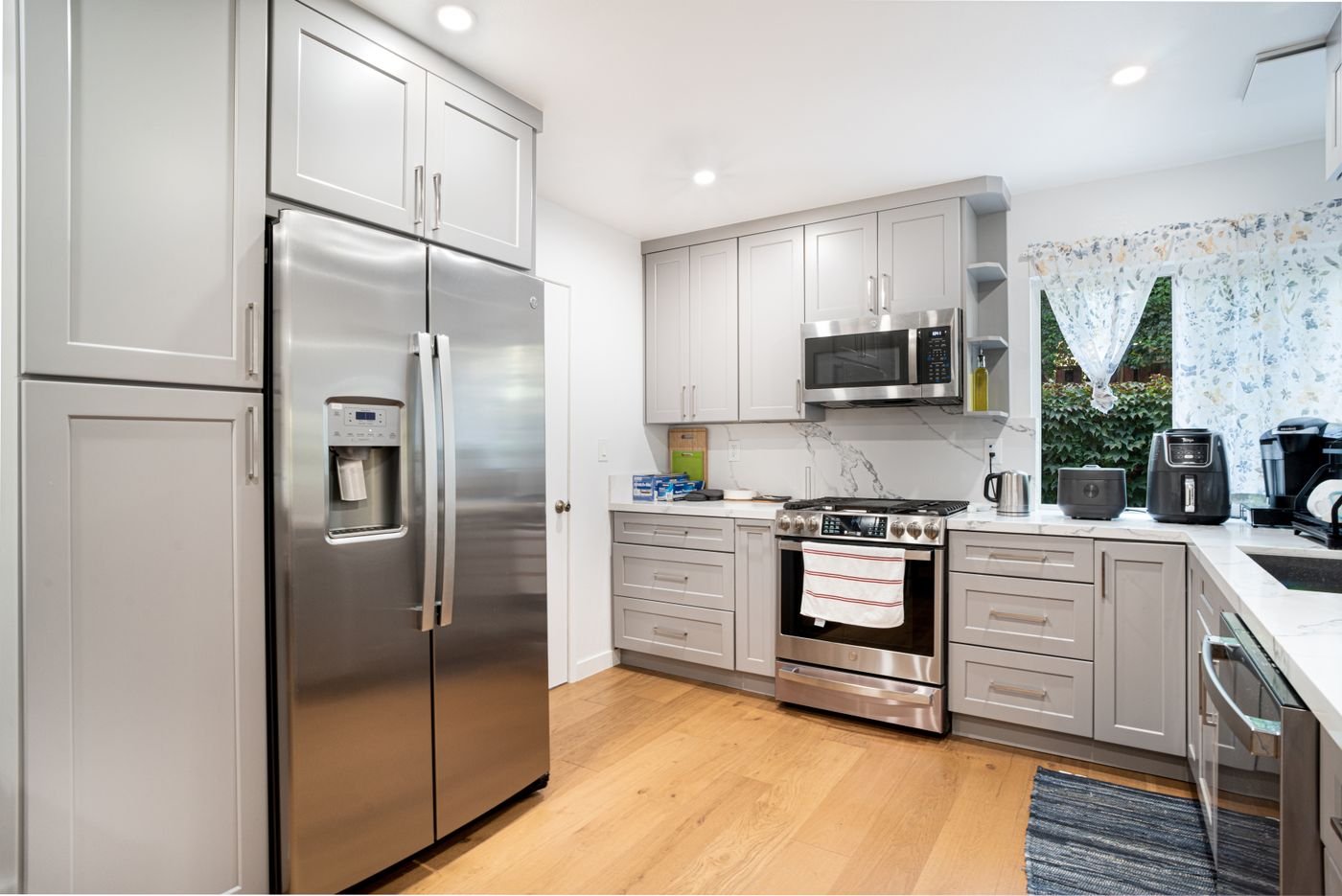
If the cabinet boxes are sound, new doors, drawer fronts, hinges and hardware can transform a kitchen at a fraction of the work of a full remodel. Painting or refinishing doors is another option. See residential painting for cabinet finishing, and kitchen remodeling for bigger changes.
Bathroom vanities and humid spaces
Moisture is hard on cabinets. Vanity doors and drawers swell, hinges rust and the underside of the cabinet floor can soften from slow leaks. If we find damage under a sink, we tell you what we see, and when a plumbing fix is needed first. See toilet and faucet installation.
Common mistakes
- Over-tightening screws. It strips the holes.
- Replacing without adjusting. Many doors only need an adjustment.
- Buying hardware without measuring. Hole spacing and hinge type matter.
- Overloading drawers. Each slide has a weight rating.
- Ignoring moisture. Leaks and humidity damage cabinets.
- Mixing hinge types. Doors may not align or close.
- Skipping the fix for a split frame. Hinges will not hold.
How to prepare
- List of doors and drawers with problems, with photos.
- Any hardware you have bought, kept unopened.
- Measurements of existing handle spacing.
- Cupboards emptied where work is needed.
- Notes on moisture, leaks or damage.
Understanding cabinet hinges
Hinges are the most common cause of cupboard door trouble, and they come in several types. Knowing which you have makes it much easier to fix or replace them.
Concealed (European-style) hinges
Used on most modern kitchen and bathroom cabinets. A cup is set into a drilled hole in the back of the door, and an arm attaches to a mounting plate on the cabinet. They have adjustment screws that move the door up and down, in and out and side to side. They come in different overlay types, depending on how much of the cabinet frame the door covers: full overlay, half overlay and inset. Replacing a hinge requires the same type and overlay.
Face-frame hinges
Used on cabinets with a frame around the opening. The hinge is mounted to the frame and the door, and may be partially visible. Many styles exist, including self-closing and decorative versions.
Butt hinges and traditional hinges
Seen on older cabinets and some furniture. The two leaves are mortised into the door and the frame. They are visible and often decorative. Loose screws and worn mortises are the usual problem.
Specialty hinges
Corner cabinets, bi-fold doors, lift-up doors and glass doors each use specific hinges. These are less forgiving, and the right replacement matters.
The three adjustments on a concealed hinge
- Side-to-side (lateral). Moves the door left or right, to even the gap between neighbouring doors.
- In and out (depth). Moves the door closer to or farther from the cabinet, so it sits flush with its neighbours.
- Up and down (height). Raises or lowers the door, so the tops line up.
Many doors that appear to need replacement only need these three adjustments. The order matters, and small turns have a large effect.
Understanding drawer slides
The slide determines how a drawer feels every day: smooth or rough, silent or noisy, full-open or partial.
- Side-mount ball-bearing slides. Two metal channels on each side, with ball bearings. Common, smooth and strong. They need a clearance on each side of the drawer.
- Under-mount slides. Hidden beneath the drawer, giving a clean look and often soft-close action. They need a drawer box designed for them.
- Roller slides. Simple nylon wheels in a track. Economical, but they offer partial extension and wear faster.
- Wood-on-wood runners. Found on older furniture. They can be waxed or repaired, and when worn, they can be replaced with modern slides.
- Heavy-duty slides. Rated for large loads, used in file drawers, pots-and-pans drawers and workshop cabinets.
Slides have weight ratings. An overloaded drawer will bind, sag or fail, and a heavier-duty slide may be the answer. Not every cabinet can take every slide, so we check the space and the construction.
How to diagnose a sticking drawer
- Remove the drawer and look inside the cabinet for debris, a bent slide or a loose mounting.
- Check the slides for dirt, damage and smooth movement.
- Check the drawer box for square. A racked box has a gap in one corner and rubs on one side.
- Check the screws, since loose or missing screws let the slide shift.
- Check for swelling. In humid months, wood drawers can swell and bind.
- Check the load. A drawer that is too heavy for its slide will drag.
Fixes follow from the cause: cleaning, tightening, realigning, replacing a slide, or repairing the box.
Repairing drawer boxes
Drawer boxes take the brunt of daily use. Common problems and repairs include:
- Loose corners. Re-glued and clamped, or reinforced with brackets or screws.
- Cracked or sagging bottoms. The bottom panel is replaced with new plywood or hardboard, fitted into the grooves or glued and fastened.
- Broken fronts. Repaired with glue and reinforcement, or replaced.
- Split sides. Glued and fastened, or replaced if badly damaged.
- Warped boxes. Sometimes straightened with moisture control and clamping, or replaced.
If a drawer box is badly damaged, a new box built to fit is sometimes the best solution, and it can be paired with new slides at the same time.
Cabinet doors: types and repairs
- Flat-panel (slab) doors. Simple, modern and prone to warping if thin or poorly made.
- Shaker doors. A frame with a recessed centre panel. Joints can open over time and be re-glued.
- Raised-panel doors. A traditional look with a profiled panel. They are subject to seasonal movement, which can show as hairline gaps in the finish.
- Glass-front doors. Have a frame holding a pane. Glass is replaced carefully, with new retainers or sealant.
- Thermofoil and laminate doors. A thin surface layer over MDF. It can peel with heat and moisture, and repairs are limited. Replacement doors are often the best fix.
When doors are damaged or outdated but the boxes are sound, replacement doors and drawer fronts are an economical way to update a kitchen. See kitchen remodeling and cabinetry.
Soft-close, push-to-open and other upgrades
- Soft-close hinges. Include a damper that slows the last part of closing. Many are drop-in replacements for standard concealed hinges, if the type matches.
- Soft-close slides. Replace existing slides, or add dampers to some types.
- Push-to-open mechanisms. A touch opens the door or drawer with no handle. Useful for a clean look, but they need the right hardware and space.
- Pull-out organisers. Racks and trays for pots, spices, waste bins and cleaning supplies. They need to match the cabinet width and the slide strength.
- Lazy Susans and corner solutions. Make corner cabinets usable, but need accurate measurement.
- Cabinet lighting. Under-cabinet and inside-cabinet lights add convenience. New wiring is electrical work, and plug-in or battery options avoid it.
Handles and pulls: planning the details
The handle is the part of the cabinet your hand touches every day. Choosing well improves comfort and style.
- Centre-to-centre measurement. The distance between the two screw holes on a pull. Common sizes exist, but older cabinets can differ.
- Knobs versus pulls. Knobs have a single hole and suit small doors and drawers. Pulls have two holes and are easier to grip on larger ones.
- Placement. Upper cabinet doors usually have handles near the bottom corner, lower doors near the top, and drawers have them centred. A template ensures consistency.
- Screw length. Doors and drawer fronts vary in thickness, and the screws must match so they neither fall short nor poke through.
- Finish. Brushed, matte black, brass, chrome and other finishes affect the look and the wear.
Moisture, steam and heat around cabinets
Kitchens and bathrooms are tough environments for cabinets. Steam from kettles and dishwashers, splashes at the sink and humidity in bathrooms attack the edges and bottoms of cabinet parts.
- Dishwasher vicinity. Steam released when the door is opened can swell adjacent cabinets. A heat shield or sealed edges help.
- Sink cabinets. Slow leaks under sinks can soften the cabinet floor. We look for signs of moisture when we work, and tell you what we see.
- Bathroom vanities. Humidity makes doors swell and hardware rust. Good ventilation is part of the fix.
- Above the stove. Heat and grease degrade finishes and hardware, so regular cleaning matters.
Cleaning and caring for cabinets
Different finishes need different care. In general:
- Use a soft cloth and mild soap, and dry the surface after cleaning.
- Avoid abrasive pads and strong solvents.
- Wipe grease promptly, especially near the cooktop.
- Keep wood cabinets out of strong direct sun, which fades finishes.
- Check hinges and slides a few times a year, and tighten what is loose.
When to repair, when to replace and when to reface
Repair
If the cabinet boxes are solid and the problem is hardware or a localised issue, repair is the sensible choice.
Replace doors and fronts
If boxes are solid but doors are damaged, outdated or peeling, new doors and drawer fronts on the existing boxes give a fresh look.
Refinish or paint
If the finish is tired but the structure is good, painting or refinishing can renew the look. See residential painting.
Replace the cabinets
If boxes are water-damaged, sagging or poorly laid out, replacement is the better option. That is a larger project, covered under kitchen remodeling.
Frequently asked questions in more detail
How do I find replacement hinges for my cabinets?
Take a photo of the hinge, open and closed, and note the brand if marked. The overlay type and the hinge style must match. We can identify and source suitable replacements.
My drawer front is crooked. Can it be fixed?
Yes. Drawer fronts are usually attached with screws from inside the drawer box, through slotted holes that allow adjustment. We loosen, align and tighten.
Can you make a drawer fit a different slide?
Sometimes. The box dimensions and the clearance decide. We measure first, and tell you if a rebuild of the box is a better choice.
Do you work on built-in furniture and old cabinets?
Yes. Older cabinets can have charming details and quirks. We repair with care and respect for the original, and we tell you where modern hardware can improve function.
Can I stay at home while the work is done?
Yes. This is typically a quiet job with little dust. You may need to empty the cupboards and drawers being worked on.
How long do the repairs take?
Adjustments and hardware swaps are quick. Drawer box rebuilds and door replacements take longer. We give you a time estimate when we see the work.
Step by step: re-hanging and adjusting a cabinet door
To show what a careful repair involves, here is how we typically tackle a door that hangs crooked or will not close properly.
- Observe. Open and close the door, and look at the gaps on all sides compared with neighbouring doors.
- Check the screws. Tighten any that are loose, at the hinge plates on the cabinet and on the door.
- Look for damage. Check for cracked hinge cups, split door edges, damaged screw holes and bent hinge arms.
- Adjust the depth screw first, so the door sits flush with its neighbours.
- Adjust the side-to-side screw, to even the gaps between doors.
- Adjust the height, by sliding the mounting plate or using the vertical adjustment, until the tops are level.
- Test the closing. The door should close fully and lightly and stay closed.
- Repair or replace parts that cannot be adjusted. That may mean filling and re-drilling screw holes or fitting new hinges.
Step by step: replacing a drawer slide
- Remove the drawer, pressing the release levers on each slide.
- Note the slide type, its length and how it mounts on the cabinet and the drawer.
- Unscrew the old slides from the cabinet and the drawer box.
- Check the cabinet and drawer for damaged screw holes and fix them.
- Mark the new positions using a level and the original locations, or the manufacturer’s template.
- Fasten the new slides, making sure they are parallel and at the same height on both sides.
- Test fit the drawer, and adjust until it glides smoothly and sits flush.
- Adjust the drawer front if it is separate, so the gaps are even.
Cabinets in older homes
Older cabinets, often built on site or in a local shop, have their own features and problems. Doors may have been hung with hinges that are no longer made. Drawers may use wooden runners that have worn. Paint may be many layers thick, sticking doors in their frames. Here is how we approach them:
- Respect the original. Many older cabinets are sturdy and well built, and worth keeping.
- Use matching or compatible hardware. Reproduction hinges and pulls are available for many styles.
- Handle paint carefully. In houses built before the 1980s, old paint may contain lead. We test or take precautions before sanding or scraping.
- Improve function discreetly. Modern slides and soft-close hardware can be fitted without changing the look.
Cabinets in rentals and commercial spaces
Rentals and commercial kitchens or break rooms see heavy use and hurried repairs. Common jobs include re-hanging doors, replacing broken hinges, fixing drawer slides and replacing missing hardware between tenants. We aim for durable repairs that stand up to wear, with consistent hardware across the whole unit so future repairs are simple. Tell us about the number of units and the timeline, and we plan the work as a batch.
Safety, child-proofing and accessibility
- Child-safety latches. Fitted inside doors and drawers that contain cleaning products, medicines, sharp tools or other hazards.
- Soft-close hardware. Reduces pinched fingers.
- Accessible reach. Pull-out shelves and lower storage make items easier to reach for people with limited mobility.
- Handle choice. Large, loop-style pulls are easier to use for people with limited grip strength.
- Anchoring tall units. Prevents tipping.
Getting the best result from a repair visit
- Test every door and drawer in the room before we come, and mark the problem ones with sticky notes.
- Take photos of each fault, plus the inside of the cabinet if possible.
- Note anything that has recently changed, such as a leak, a renovation or a heavy item being stored.
- Decide whether you want to keep the existing hardware or upgrade it.
- Keep any old hardware that has come off, so we can match it.
A note on cabinet quality and expectations
Cabinets range from basic flat-pack boxes to custom-built joinery, and what can be repaired depends on how they were made. Solid wood and plywood boxes hold screws well and can be repaired many times. Particle board and thin MDF are less forgiving, since screw holes wear out and edges crumble when wet. We tell you honestly what we find and what is likely to last, so you can decide whether to repair, upgrade the hardware or plan a replacement. Where a cabinet is not worth repairing, we say so, and explain why.
Official guidance: For independent consumer information in Ontario, see Consumer Protection Ontario.
Cupboard and drawer service in London, Ontario
Send us a list and a few photos. We will tell you what is involved and give you a clear written estimate. You can call 519-494-3673, message us on WhatsApp or use the contact form for a free consultation. For other small jobs, see general handyman repairs.
Before we start
A little preparation makes cupboard & drawer installation and repair go more smoothly. Photos, rough measurements and a list of what you want done. If you already own the item being installed, keep its box and hardware.
Serving London, Ontario
We work with homeowners, landlords and businesses across London, Ontario and the surrounding area. Call 519-494-3673 or request a free consultation. You can also browse all of our services or see more handyman services work.
Frequently asked questions
How much does cupboard & drawer installation and repair cost in London, Ontario?
Handyman work is usually quoted by the job or by the hour, depending on how clear the scope is. Small, well-defined tasks are easiest to price from a few photos; a list of several jobs is best quoted together. Call 519-494-3673 or send a message for an estimate for your address.
How long does cupboard & drawer installation and repair take?
Most handyman tasks fit in one visit, and a short list of jobs often fits in a day. Anything that needs materials to be ordered or paint to cure is scheduled in two steps.
What should I have ready before booking cupboard & drawer installation and repair?
Photos, rough measurements and a list of what you want done. If you already own the item being installed, keep its box and hardware.
What should I know about cupboard & drawer installation and repair before we start?
Many sticking drawers only need adjustment rather than replacement; we will check before recommending parts.
Why do my cupboard doors not close properly?
Usually the hinges are loose or out of adjustment, a screw has pulled out of the door or frame, or the door has swelled or warped. Most hinges have adjustment screws that move the door up, down, in and out, and many problems are fixed in minutes.
Can a sticking drawer be fixed without replacing it?
Often, yes. Drawers stick because the runners are dirty, loose or misaligned, the drawer is overloaded or the box has come out of square. We check before recommending new parts.
Can you add soft-close hardware?
In many cases, yes. Soft-close hinges and drawer slides can replace standard ones, or be added as attachments, depending on the cabinet construction. Check the cabinet and the hardware before buying, or ask us first.
Can you change the handles and pulls?
Yes. We replace and install handles and pulls, matching the hole spacing where possible or filling and re-drilling where you want a new style. Measure the centre-to-centre spacing of the existing holes before you shop.
Can you repair damaged cabinet doors or boxes?
Often, yes. Chips, loose joints, broken corners and sagging bottoms can be repaired. If the material is badly water-damaged, replacement of the part may be a better answer.
Related services
Carpentry
Good carpentry quietly holds a home together: trim that sits tight, doors that close properly and…
Learn more →Drywall Repair
Dents, nail pops, cracks and water-damaged patches are easy to spot and hard to hide unless…
Learn more →Furniture Assembly & Disassembly
Flat-pack instructions are rarely fun. We assemble beds, wardrobes, desks, shelving and office furniture, and take…
Learn more →General Handyman Repairs
Small jobs pile up. Our general handyman service covers the to-do list: the squeaky door, loose…
Learn more →Indoor & Outdoor Repair Projects
From a loose porch step to a damaged interior panel, we repair and refresh the parts…
Learn more →Shelf & Cabinet Installation
Shelves and cabinets only work if they are level, secure and anchored into the right structure.…
Learn more →Last updated
Free consultation
Tell us what you need and get a clear, written estimate.
Ready to start your project?
Book a free consultation. Tell us what you need and we will get back to you with clear next steps.