
TV Mounting Services in London, Ontario
- Free consultation
- Written estimates
- London, Ontario
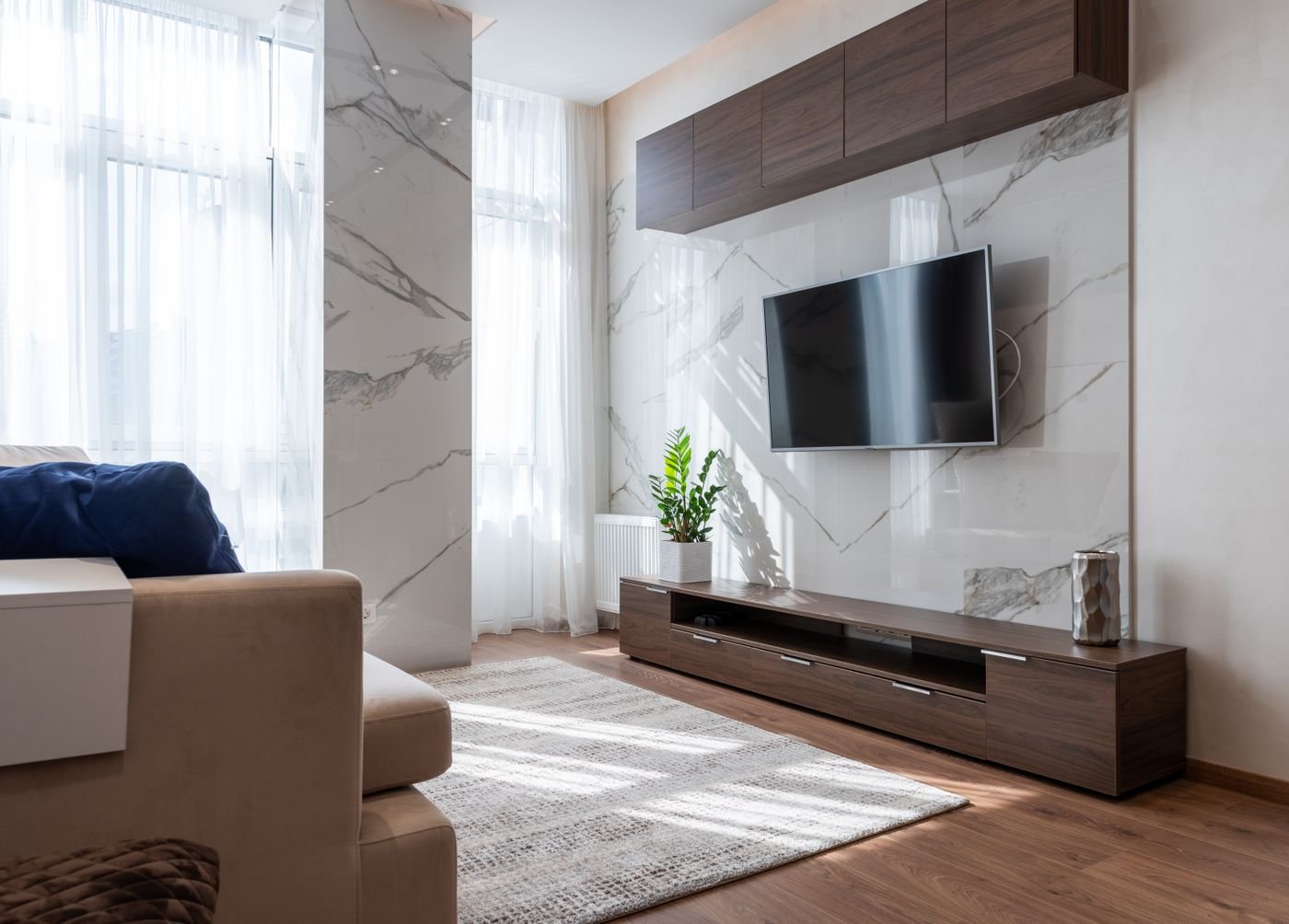
A mounted TV should be secure, level and at a comfortable height. We mount screens of all sizes on drywall, wood and masonry and tidy the cables.
What TV Mounting Services includes
- Fixed, tilting and full-motion mounts
- Studs located and loads checked
- Cable management and in-wall routing
- Soundbar and shelf placement
How we work
- Preparation. Tell us about the job. We review photos and details, ask the right questions and give you a clear estimate.
- Communication. We agree scope, materials and timing with you and keep you updated as work progresses.
- Execution. We do the work carefully, protect your space, clean up and walk you through the result.
Good to know: Have the TV model and mount (if you already have one) ready; the weight and VESA pattern determine the right installation.
A television is a daily-use fixture, so mounting it well matters
A television is one of the heaviest and most expensive things most households hang on a wall, and it is also one of the things you look at every day. A poorly mounted TV can sit crooked, sag over time, sit too high for comfortable viewing or leave a tangle of cables running down the wall. A well-mounted TV looks like part of the room: level, secure, at the right height and with the wiring out of sight.
This guide explains how professional TV mounting works in London, Ontario homes, what decisions you will make before the visit, which bracket suits which room, how walls differ, and how to avoid the mistakes we see most often. It is written so you can plan the job properly whether you book us or not, and so you know what a careful installation involves if you do.
What a careful TV mounting visit includes
The actual drilling takes only a small part of the visit. Most of the time goes into the things that determine whether the result is good in five years, not just on the day.
- Checking the wall. We identify what the wall is made of, locate studs or masonry, and look for hidden obstacles such as pipes and wiring where it is safe and reasonable to do so.
- Confirming the bracket. We match the bracket to the weight, size and mounting pattern of the TV, and to how you want to use it.
- Agreeing the height and position. We mark the position with tape while you sit where you normally watch, so you see it before any holes are drilled.
- Mounting and levelling. The bracket is fixed securely, the TV is lifted into place and levelled, and the connection is tested.
- Cable management. Cables are routed neatly, hidden behind the screen, in a cover or through a recessed pass-through, depending on the option you choose.
- Connecting and testing. We connect your devices, check that every input works and, if you wish, help set up the sound bar or streaming box.
- Clean-up. Dust is vacuumed, packaging is removed if you want it taken away, and the area is left tidy.
Choosing a bracket: fixed, tilting or full-motion
There are three common bracket types, and each suits different rooms. The right choice depends on where the TV will hang, where people sit, and how much flexibility you want.
Fixed brackets
A fixed bracket holds the TV flat and close to the wall. It gives the cleanest, slimmest look and is the simplest and most stable option. It is a good choice when the TV is at or near eye level and you sit directly in front of it. The limitation is access: it is harder to reach the back of the TV to plug in new devices, so cables should be connected before the TV goes on the wall.
Tilting brackets
A tilting bracket lets you angle the screen down a few degrees. This is useful when the TV has to hang higher than ideal, such as above a fireplace or a dresser, or when glare from a window affects the picture. It adds only a little depth, so it still looks tidy, while improving comfort and reducing glare.
Full-motion (articulating) brackets
A full-motion bracket has an arm that swings the TV out from the wall and turns it left or right. It is ideal for corner installations, open-plan rooms where the TV is watched from the kitchen and the sofa, and bedrooms where you watch from the bed. It also makes it easy to reach the back panel. The trade-off is that the arm adds depth and can put more leverage on the wall, so correct fixing into studs or a suitable masonry anchor matters even more.
Which one is right for you?
- Living room, sitting directly in front, TV at eye level: fixed.
- TV above a mantel, dresser or media console: tilting.
- Corner, open-plan space or bedroom: full-motion.
- Rental or apartment with limits on drilling: ask us about minimal-fixing options and about what your lease allows.
Getting the height right
The most common mistake in TV mounting is placing the screen too high. It is easy to do, because a high TV looks good in an empty room. But viewing comfort is judged from the seat, and a TV that is too high leads to neck strain over long viewing sessions.
A good starting point is to place the centre of the screen at about the eye level of someone sitting in the main viewing seat. Because sofas and chairs differ, we always check this with tape on the wall, with you in the seat. If the TV has to go higher, for example above a fireplace, a tilting bracket brings the screen angle back toward your eyes.
- Sit in the usual spot and look straight ahead. Where your eyes fall is roughly where the middle of the screen should be.
- Consider everyone who watches. In a family room, people sit in different places and at different heights.
- Think about furniture. A sound bar, console or shelf below the TV takes space. Leave room for it.
- Allow for the bracket. The screen sits slightly lower or higher than the mounting plate, depending on the bracket.
Understanding your wall
The wall decides how the bracket is fixed, and a good installation starts with understanding it. Homes in London include a mix of eras and construction methods, so we do not assume.
Drywall over wood studs
This is the most common wall in newer homes and renovations. The bracket should be fixed into the wood studs behind the drywall, using appropriate lag screws. Drywall alone cannot hold the weight of a television. Studs are usually spaced at regular intervals, but they can vary, especially near corners, windows and in renovated walls. We find them with a stud finder and confirm with a test before drilling the final holes.
Plaster and lath
Older homes often have plaster over wood lath. These walls can be hard and brittle, and drilling needs care to avoid cracking. We use suitable drill bits and a measured approach, and fix into the studs behind the plaster wherever possible.
Brick, concrete and block
Masonry walls can hold a lot of weight, but need masonry drill bits and anchors rated for the wall and the load. We choose anchors for solid brick and concrete differently from those used in hollow block, and we make sure holes do not break the edge of a brick or fall in a mortar joint where the fixing would be weaker.
Metal studs and condominium walls
Some condominiums and commercial spaces use metal studs, which need special fixings. If you live in a condo, check any rules about drilling into walls, working hours and contractor access before booking. We can work around those rules once we know them.
Feature walls, stone and tile
Stone veneers, tile and panelled feature walls need extra planning. We look at what is behind the surface and may recommend mounting on a backing board or fixing to the structure behind the finish. If a wall is a poor candidate, we tell you and suggest alternatives.
Hiding cables the safe way
Visible cables are the main thing that makes a mounted TV look unfinished. There are several ways to deal with them, and each has a different level of work and cost.
- Cable covers. A slim channel fixed to the wall hides cables on the surface. It is the simplest and least invasive option, and can be painted to match the wall.
- Behind the TV. Short cables run behind the screen and to a console below. This works well when devices sit directly under the TV.
- In-wall pass-through. Cables for HDMI, audio and low-voltage connections are routed inside the wall between two plates, one behind the TV and one near the devices. This gives the cleanest result.
- Recessed power outlet. A recessed outlet behind the TV lets the plug sit inside the wall so the TV can sit flat against it.
It is important not to run ordinary power cords inside walls. Power cords are not designed for in-wall use, and doing so can be a fire risk. A proper recessed outlet kit uses a rated cable and a compliant installation. If a new outlet needs to be installed or wiring changed, that work belongs to a licensed electrician, and we will tell you plainly when that is the case. In Ontario, electrical installation work is regulated, and we do not cut corners on that.
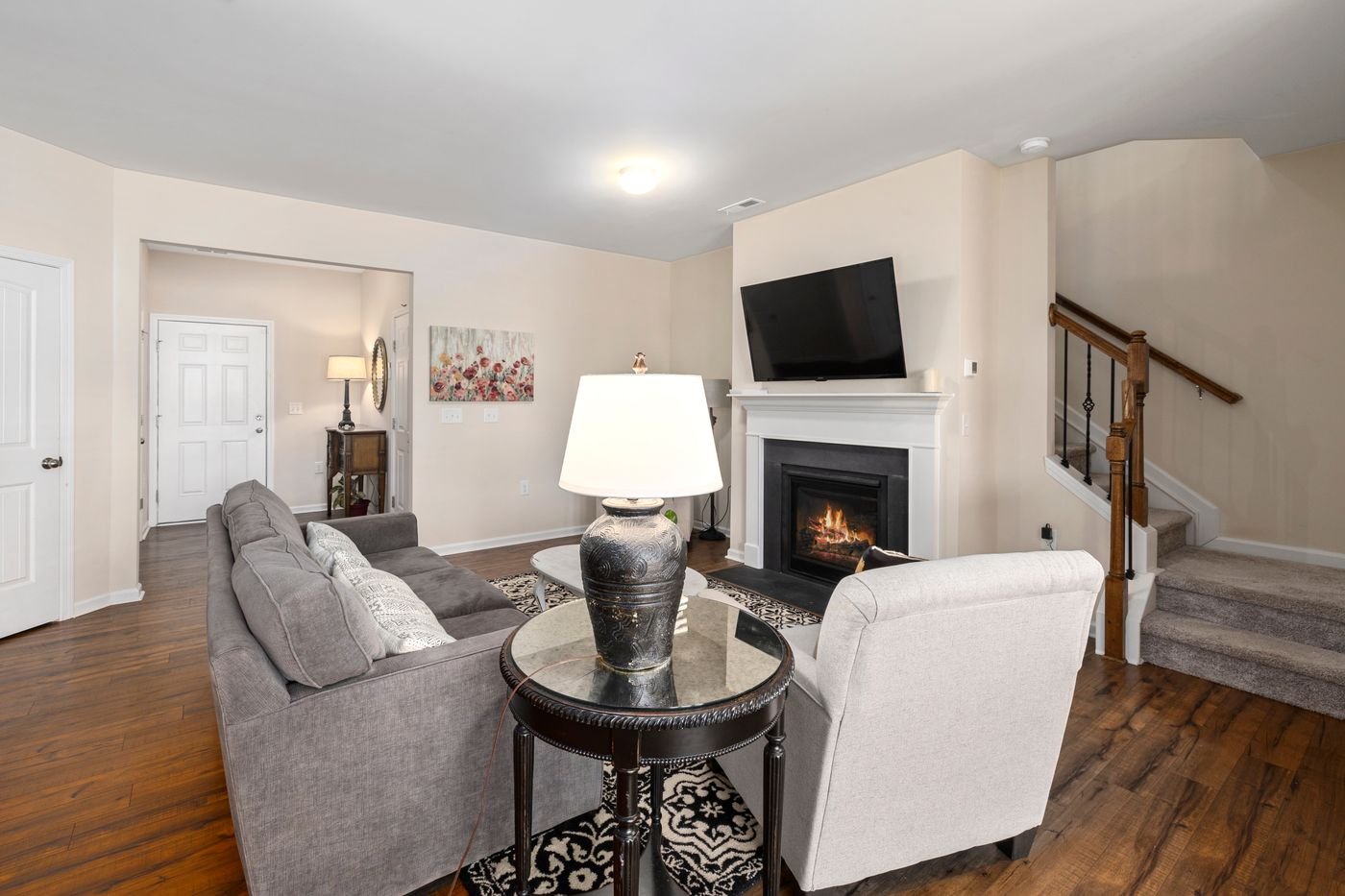
Above a fireplace: what to consider
A TV above the fireplace is a popular design, and it can look great, but it is also the situation that most often goes wrong. Before we mount a TV over a fireplace we look at these points.
- Heat. A working wood or gas fireplace produces heat that rises. Check the manufacturer’s guidance for the TV and the fireplace, and consider whether the clearance above the mantel is adequate.
- Height. A mantel often puts the TV well above eye level. A tilting or pull-down bracket helps, but the best solution is sometimes a lower position or a different layout.
- Wall surface. Stone, brick and tile fireplace surrounds need masonry fixings and extra care. Painted drywall above the mantel needs studs.
- Cable route. Running cables up a fireplace wall is hard. Planning the route first avoids visible wires or a difficult retrofit.
If you are designing a feature wall, our TV and fireplace wall designs service covers the whole look, including built-in shelving, panelling and lighting around the screen.
Soundbars, shelves and the rest of the wall
A mounted TV often leads to other decisions. A sound bar needs its own bracket or a shelf below. Streaming boxes and consoles need ventilation. Speakers need power and signal. We can mount the TV and sound bar together, align them, and plan where each device will sit so airflow is not blocked.
If you want a shelf or cabinet beneath the TV, our shelf and cabinet installation team can install it so the two are aligned, and keep cables and devices tidy.
Common TV mounting mistakes
- Mounting into drywall only. Drywall anchors are not suitable for the weight of a TV. The bracket must go into studs or a masonry wall with proper anchors.
- Mounting too high. It looks fine standing up, but it is uncomfortable when seated. Mark and check before drilling.
- Ignoring the VESA pattern. Bracket and TV must match in mounting pattern and weight rating.
- Forgetting to connect first. On fixed brackets, devices should be plugged in before the TV goes on the wall.
- Running power cords inside the wall. Use a recessed outlet kit and, where needed, a licensed electrician.
- Not checking behind the wall. Pipes and wiring can run where you do not expect. Careful location avoids damage.
- Over-extending a full-motion arm. A heavy TV on a long arm needs strong fixing. The bracket must be rated well above the TV weight.
- Skipping a level check. Even a small tilt is visible every day. Levelling is done on the bracket and again with the TV in place.
How to prepare for your TV mounting visit
A few minutes of preparation helps the visit go smoothly.
- Send us the TV brand and model number, and a photo of the wall.
- If you have bought a bracket, keep it unopened, with all the hardware.
- Decide where the TV will be and who will watch from where.
- Move furniture about a metre away from the wall.
- Have your streaming box, console and cables on hand for connection.
- Tell us about any building rules if you live in a condo or apartment.
- Know where your breaker panel is, especially if a recessed outlet is planned.
Mounting in different rooms
Living room
The living room usually has the largest screen and the most seating positions. Aim for a position that works for everyone, keep glare from windows in mind, and give the sound bar and devices a tidy home. A tilting or full-motion bracket gives flexibility.
Bedroom
In bedrooms the viewing position is often lying or sitting up in bed, which is lower than on a sofa. Full-motion brackets make it easy to angle the screen toward the bed, and a small screen can be fixed at a comfortable height. Cable management matters because cables are often visible from the bed.
Kitchen and dining areas
Screens in kitchens need to stay clear of steam and splashes, and often benefit from a swivelling arm so they can be turned toward different work areas. Mounting height is usually higher because people stand to watch.
Basement and media rooms
Basements often have concrete or block walls, or drywall over furring strips, and the wall type decides the fixings. If you are building a media room, our basement finishing service can plan the wall, the wiring and the layout together.
Offices, restaurants and commercial spaces
Commercial screens often need a consistent look, secure mounting and tidy wiring, and the work may need to be done outside business hours. Tell us about your hours and building access and we can plan around them.
When a TV mounting job grows into something bigger
Sometimes a simple TV mounting leads to a larger project. You might decide you want shelves on both sides, a recessed niche, panelling, new lighting or a built-in console. We can handle those as a larger carpentry or remodeling project, with a clear plan and written estimate. If you only want the TV on the wall, we keep it simple.
Safety and quality: how we think about it
A television falling off a wall is dangerous, so our approach is conservative. We choose brackets rated well above the weight of the TV, fix into solid structure, and test the mount by loading it before we leave. We do not guess at wall construction, and we tell you if a wall is not suitable. If a job needs a licensed trade, such as an electrician for a new outlet, we say so and arrange it, instead of attempting work that is outside our scope.
Maintenance after installation
- Check the bracket fixings occasionally, especially on full-motion arms that are moved often.
- Do not hang anything extra on the TV or bracket.
- Keep ventilation clear behind and around the screen.
- If you replace your TV with a larger or heavier one, check the bracket rating first. Ask us if you are not sure.
- When moving house, ask for the bracket to be removed carefully so the wall can be patched and painted. Our drywall repair service can make the old holes disappear.
Choosing a TV size and viewing distance
If you are still choosing a television, the wall and the room can help you decide. A larger screen is not always better, because the right size depends on how far you sit from it and how wide the wall is. As a rough guide, a comfortable viewing distance is often around one and a half to two and a half times the screen’s diagonal measurement, depending on the resolution and your preference.
A screen that is too big for the seating distance makes you move your head to see the edges, and one that is too small loses detail. Measure the wall width, the space for the stand or bracket, and the distance from the main seat, then compare these with the dimensions of the sets you are considering. Remember that the weight and the VESA pattern also affect which brackets will work.
Glare, reflections and lighting
A mounted TV should be positioned with the room’s light in mind. Windows opposite the screen cause reflections, and bright lamps behind the seats can too. Before choosing the position, sit in the seat on a sunny afternoon and in the evening with lamps on, and note where reflections fall. A tilting bracket can angle the screen away from a reflection, while a full-motion arm lets you adjust through the day. Matte-screen models and curtains also help. Soft bias lighting behind the TV can reduce eye strain in dark rooms.
Removing, moving or replacing a mounted TV
Mounted TVs do not stay on the wall forever. When you replace a television, check that the existing bracket is rated for the new weight and has a compatible hole pattern, and that the wall fixings are still sound. When you move house, the bracket and the TV are taken down carefully, and the holes in the wall are filled and painted. See drywall repair for how holes are made to disappear. If you rent, ask the owner or property manager what is allowed, and consider options that need fewer or smaller holes.
Outdoor, commercial and special installations
- Outdoor TVs. Need weatherproof sets and mounts designed for outdoor use, with protection from sun, rain and temperature swings, and cables and power rated for the location. Outdoor power is electrical work for a licensed electrician.
- Bathrooms and humid rooms. Require TVs and mounts suited to moisture, and placement away from direct water.
- Commercial screens. Menu boards, reception displays and meeting-room screens may be larger and heavier, with security fixings, cable management and, sometimes, a need to work outside opening hours.
- Multi-screen walls. Need careful alignment, spacing and structural planning.
- Ceiling mounts. For shops, bedrooms and some commercial spaces. They need to be fixed into structure above the ceiling.
Questions to ask before you book a TV mounting
- How will the wall be checked, and what will happen if the wall is not suitable?
- Which bracket and fixings will be used, and are they rated for my TV with a margin?
- How will the height be decided, and can I see it before drilling?
- How will the cables be handled, and what is included?
- Who does any electrical work, and is it licensed?
- What is included in the visit: connecting devices, setting up a soundbar and removing packaging?
- What happens if something unexpected turns up?
Remotes, signals and getting the connections right
Once the TV is on the wall, devices that depend on a line of sight, such as infrared remotes and some soundbars, need to be positioned so that their signals reach each other. Cabinets with closed doors can block infrared, so many people use remotes that work by radio or extenders. HDMI cables should be rated for the resolution and features you want, and long runs or in-wall runs may need higher-quality or active cables.
If you use a soundbar with a return channel (ARC or eARC), connect it to the TV input that supports it. We test every input before we leave, and we label cables where it helps. Keeping a short list of which device is plugged into which input saves time later.
Official guidance: For independent consumer information in Ontario, see Consumer Protection Ontario.
Book TV mounting in London, Ontario
If you would like your TV mounted neatly and securely, send us the model number, a photo of the wall and a few details about the room. We will confirm the best bracket and approach, give you a clear written estimate and arrange a time that suits you. You can call 519-494-3673, message us on WhatsApp or use the contact form for a free consultation.
Before we start
A little preparation makes tv mounting services go more smoothly. Photos, rough measurements and a list of what you want done. If you already own the item being installed, keep its box and hardware.
Serving London, Ontario
We work with homeowners, landlords and businesses across London, Ontario and the surrounding area. Call 519-494-3673 or request a free consultation. You can also browse all of our services or see more handyman services work.
Frequently asked questions
How much does tv mounting services cost in London, Ontario?
Handyman work is usually quoted by the job or by the hour, depending on how clear the scope is. Small, well-defined tasks are easiest to price from a few photos; a list of several jobs is best quoted together. Call 519-494-3673 or send a message for an estimate for your address.
How long does tv mounting services take?
Most handyman tasks fit in one visit, and a short list of jobs often fits in a day. Anything that needs materials to be ordered or paint to cure is scheduled in two steps.
What should I have ready before booking tv mounting services?
Photos, rough measurements and a list of what you want done. If you already own the item being installed, keep its box and hardware.
What should I know about tv mounting services before we start?
Have the TV model and mount (if you already have one) ready; the weight and VESA pattern determine the right installation.
What size TV can you mount?
We mount everything from compact kitchen and bedroom screens to very large living-room televisions. What matters is the weight and the VESA hole pattern on the back of the set, plus the wall it is going on. Send us the model number and a photo of the wall and we will confirm the right bracket and fixing method before the visit.
Can you mount a TV on brick, concrete or plaster?
Yes. Masonry, concrete block and plaster walls each need different anchors and drill bits than a standard wood-stud drywall wall. We choose fixings rated for the wall and the load, and we tell you in advance if a wall is a poor candidate.
Can you hide the cables inside the wall?
In most cases, yes. A recessed power and cable pass-through behind the TV keeps wires out of sight while staying safe and tidy. Power cords are not run inside the wall itself. We use a proper recessed outlet kit where an outlet is needed, and we will tell you if a job needs a licensed electrician.
Do I need to supply the bracket?
You can supply your own or we can bring one suited to your TV and wall. Fixed, tilting and full-motion brackets all behave differently, and the right choice depends on viewing height, room layout and how often you want to move the screen.
Can you mount a TV above a fireplace?
Often, yes, but it needs planning. Heat, viewing height and cable routing all matter. We will check the wall surface and the clearance above the mantel, and suggest a bracket that lets the screen tilt down or pull forward if the height is too high for comfortable viewing.
Related services
Carpentry
Good carpentry quietly holds a home together: trim that sits tight, doors that close properly and…
Learn more →Drywall Repair
Dents, nail pops, cracks and water-damaged patches are easy to spot and hard to hide unless…
Learn more →Furniture Assembly & Disassembly
Flat-pack instructions are rarely fun. We assemble beds, wardrobes, desks, shelving and office furniture, and take…
Learn more →General Handyman Repairs
Small jobs pile up. Our general handyman service covers the to-do list: the squeaky door, loose…
Learn more →Indoor & Outdoor Repair Projects
From a loose porch step to a damaged interior panel, we repair and refresh the parts…
Learn more →Shelf & Cabinet Installation
Shelves and cabinets only work if they are level, secure and anchored into the right structure.…
Learn more →Last updated
Free consultation
Tell us what you need and get a clear, written estimate.
Ready to start your project?
Book a free consultation. Tell us what you need and we will get back to you with clear next steps.